

Age-related macular degeneration (AMD) is the leading cause of blindness in people over the age of 50, affecting approximately 1.8 million Americans — more than cataracts and glaucoma combined. If you’re not familiar with this condition, check out our resource on the subject for more information.
If you have heard of AMD, you might not be aware that there are two different kinds: wet and dry AMD, both affecting your central vision. In both cases, an important structure located in the center of the retina — the macula — begins to break down. With this in mind, there are some important differences between the two.
What is Dry AMD?
Dry AMD makes up about 90% of all cases of AMD. In the early stages, the symptoms start slowly and progress over several years, with vision loss occurring in the mid to late stages. It is called “dry” AMD because there is no leakage of fluid from the eye’s blood vessels.
Dry AMD is characterized by the formation of white or yellowish spots on the retina, called drusen, which cause the macular cells to deteriorate. Dry AMD may also affect only one eye at first, causing the other to overcompensate until it, too, becomes affected.
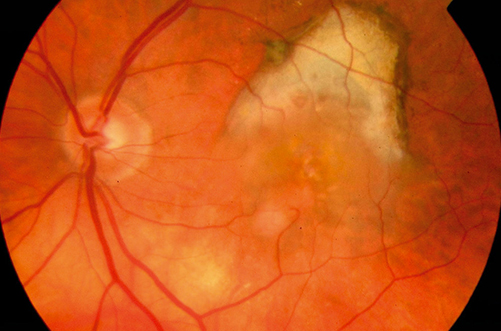
Signs and Symptoms of Dry AMD
Symptoms of dry AMD include:
- Reduced central vision in one or both eyes
- Visual distortions, such as straight lines seeming curved and colors seeming muted or less bright
- Difficulty adjusting from brighter to lower light, and needing brighter light to accomplish close-up tasks
- Difficulty recognizing faces and reading print

What is Wet AMD?
Nearly all cases of wet AMD begin as dry AMD, but unlike dry AMD, the symptoms of wet AMD may progress over days or weeks instead of years, causing abrupt and permanent vision loss.
In wet AMD, abnormal blood vessels begin to form beneath the retina, which can leak blood and fluid into the eye and damage the cells of the retina, causing scarring, which leads to the loss of vision.
Signs and Symptoms of Wet AMD
Symptoms of wet AMD are very similar to those of dry AMD, the main difference being that they occur suddenly and progress rapidly:
- Reduced central vision in the form of a well-defined dark spot in the middle of your sight
- A sudden blurriness or haziness of vision
- Straight lines appearing distorted or bent
- Difficulty adapting from bright to lower light
How does Dry AMD Turn into Wet AMD?
Only about 10% of cases of dry AMD will progress to wet AMD. This is because the growth of abnormal blood vessels in the retina is the body’s misguided attempt to supply more nutrients and oxygen to the struggling macula. Instead, these blood vessels end up bursting and leaking into the retina, causing even more damage.
This is not to say that all cases of wet AMD will start as dry AMD. If you’re experiencing any of the above symptoms — especially if they are sudden and seem to come out of nowhere — it’s important to seek medical help immediately.


